The Five Hour Rule for Starting a Side Hustle Without Busywork

A surprising amount of side-hustle advice starts with “wake up at 5 a.m.”
That is useful if you enjoy being awake at 5 a.m., your children, pets, neighbors, knees, and coffee maker all agree, and nobody in your house has opinions. For everyone else, the problem is not laziness. The problem is that starting a business can expand to fill every available crack in your life, like glitter or laundry.
So try this instead.
For the first month, cap the business at five focused hours a week.
Not five hours of scrolling “for research.” Not five hours of font pairing. Not five hours of whispering “CEO energy” while choosing beige templates. Five hours of work that creates evidence.

Five hours forces better decisions
A time limit is not a punishment. It is a filter.
When you only have five hours, you cannot do all the little business-adjacent tasks that feel productive but prove nothing. You have to pick work that answers real questions.
Will anyone buy this?
Can I explain it clearly?
Can I find the right people?
Does the first version take forever?
What do people actually ask when they see it?
That is the point of the Five Hour Rule for Starting a Side Hustle Without Busywork. The goal is not to build a perfect little internet kingdom in one month. The goal is to collect signs from reality before you spend six weekends designing a logo that looks like a moody wellness candle.
Reality is rude sometimes, but it is useful.
Hour 1 is for defining one offer
Start with one offer. Not a brand universe. Not a product suite. Not “helping busy people live their best lives,” which could mean meal prep, divorce coaching, or selling planner stickers shaped like tiny emotional support frogs.
Pick four things:
One customer
Who has the problem?
One result
What changes for them?
One format
What do they receive?
One price
What does the paid test cost?
For example:
“I help new Airbnb hosts create a simple guest checklist for $75.”
“I make three custom birthday shirt designs for parents planning a themed party for $45.”
“I set up a one-page weekly meal plan template for families who hate deciding what is for dinner for $30.”
Small is good. Clear is better. Paid is best, because compliments do not pay for printer ink, snacks, or the emotional damages caused by Canva crashes.

Hour 2 is for finding ten real people
Once the offer exists, find ten people or businesses that clearly fit the problem.
Ten is enough to learn something without turning your evening into a detective documentary. You are not building a giant spreadsheet called “Prospects Final FINAL Real Final.” You are making a short list.
Look for people who match the offer, not people who are simply nearby, nice, or related to you by blood and therefore trapped at Thanksgiving.
If your offer is for new Airbnb hosts, find new listings with sparse guest info.
If your offer is for birthday shirt designs, find parents in your circle who recently planned parties or always go big on themes.
If your offer is for meal planning, think of people who mention dinner stress often enough that “tacos again” has become a household governance policy.
Write their names down. Keep it simple.
Hour 3 is for normal outreach
Now send direct, normal messages.
Normal is the key word. Do not send a nine-paragraph origin story that begins with your childhood love of laminated chore charts. Do not open with “Hey queen,” unless this is already how you speak to that person and nobody has asked you to stop.
A good message can be short:
“Hey, I’m testing a simple guest checklist service for new Airbnb hosts. I noticed your listing has a lot of great details, but the check-in info looks like it could be easier to scan. Would you be open to a quick paid test? I’m doing the first few for $75 and would love your honest feedback.”
Ask questions. Offer the paid test. Let the person say yes, no, or “tell me more.”
A no is not failure. Silence is not a curse placed on your bloodline. It is information. Keep moving.

Hour 4 is for the smallest deliverable
This is where busywork sneaks in wearing a fake mustache.
You do not need the full course, the deluxe package, the welcome guide, the client portal, the branded invoice template, and the vibes. You need the smallest thing that helps the first customer.
Make only what the paid test needs.
That might be:
One checklist
One service package
Three product designs
One working template
One short how-to guide
One cleaned-up process
If the first version embarrasses you slightly, congratulations, you are probably being efficient. The goal is not sloppy work. The goal is small useful work.
Give the customer the thing. Watch what happens. Did it solve the problem? Did they ask for changes? Did they understand how to use it? Did making it take two hours or eighteen, including one spiritual crisis over margins?
Write that down.
Hour 5 is for reviewing the evidence
The fifth hour is not for judging yourself like a disappointed talent show panel. It is for reviewing evidence.
Ask:
What did people ask before buying?
Where did they hesitate?
Did anyone pay?
What took too long to make?
What part felt easy?
What part made you want to fake your own vacation?
What would you change next week?
This is how a side hustle gets sharper. Not through guessing. Not through copying someone with a ring light and a suspiciously clean refrigerator. Through repeated contact with real people, real objections, and real money.
Some weeks, the evidence will say, “This offer is confusing.” Great. Fix the wording.
Some weeks, it will say, “People like this, but not at that price.” Test a different scope.
Some weeks, it will say, “Nobody wants this.” Painful, yes. But better to learn that in five hours than after building a 47-page workbook and naming your email list.
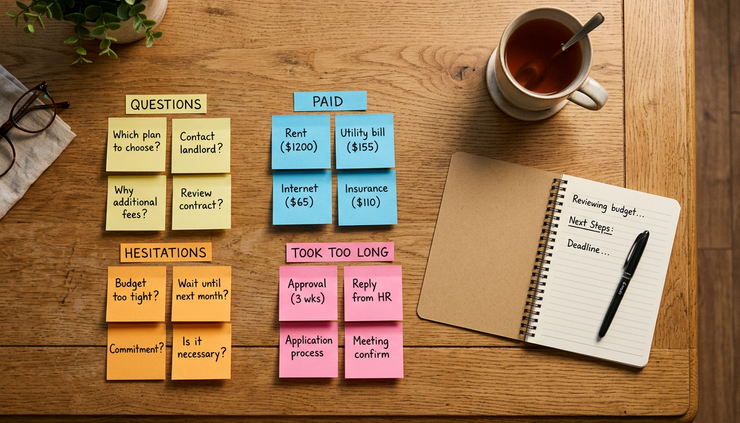
Skip the fake productivity trap
Do not redesign the logo.
Do not compare twenty email platforms.
Do not spend an hour choosing business-card finishes unless your side hustle is judging business-card finishes, in which case, carry on, tiny cardstock monarch.
None of that is customer evidence.
Busywork feels safe because it cannot reject you. A logo never says, “I’m not sure I need this.” A color palette never asks, “Can you do it by Friday?” A platform comparison chart never ghosts you after saying, “Sounds interesting.”
But customers are where the truth lives. Annoying? Sometimes. Useful? Absolutely.
If you are subscribed, check the welcome email for the current code for 25% off the upcoming Untrained Matriarch book club launch, and if you aren't WHY NOT? INVEST IN YOURSELF!
We will be starting monthly and biweekly accountability check-ins. Buy the Side Hustle Entrepreneur book and your first 2 weeks of check-ins are free.
Start with five hours this week. Define one offer, find ten people, send the messages, make the smallest useful thing, and review what happened.
That is enough to begin. And best of all, nobody has to meet their laptop at 5 a.m. like it is a secret airport shuttle.
Comments